
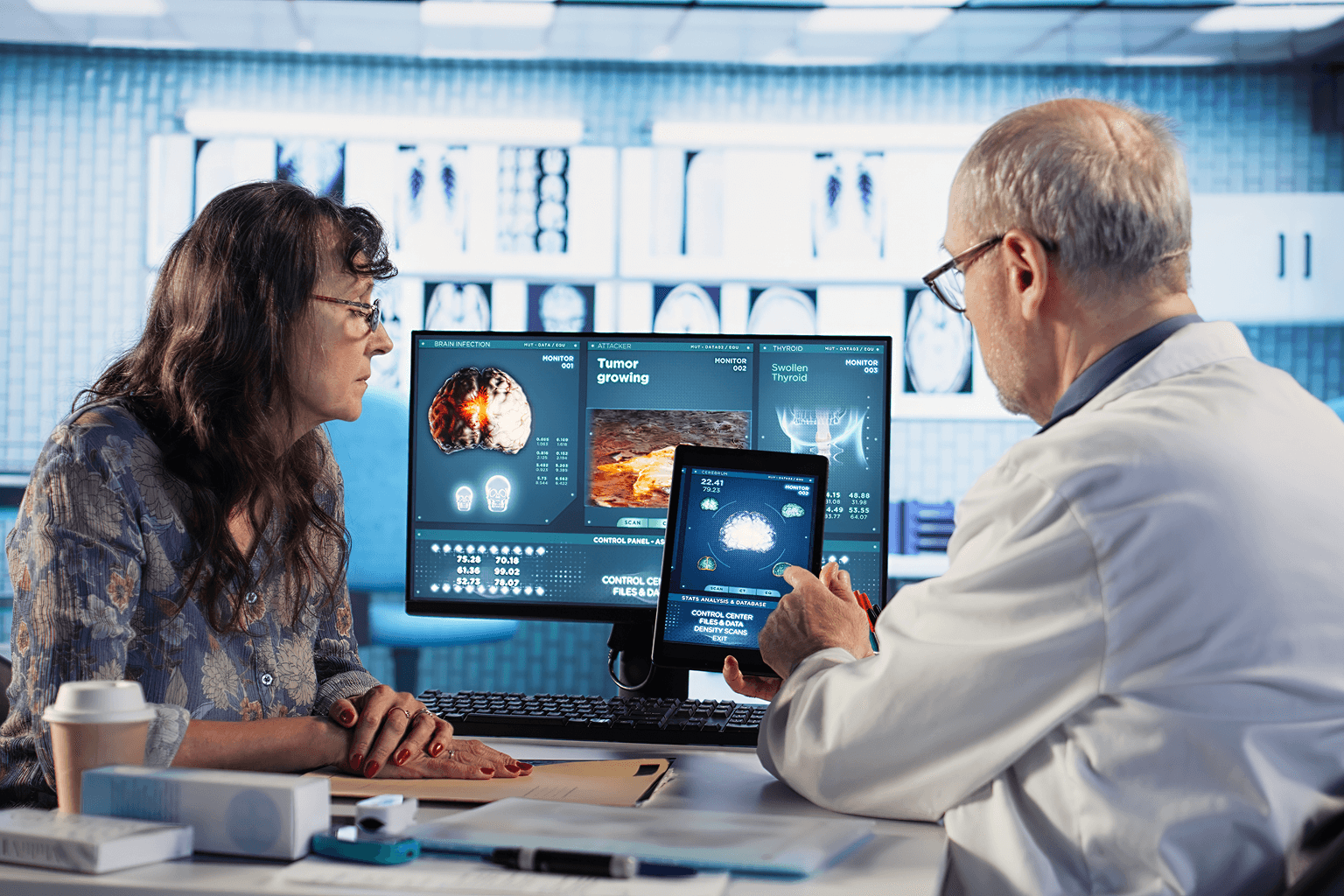
The healthcare industry is evolving fast, especially with predictive analytics. This technology uses data, AI, and machine learning to forecast future health outcomes, improve diagnosis, and personalize treatment plans. It helps healthcare providers make faster, more accurate decisions — leading to better patient outcomes and more efficient care delivery.
By analyzing historical and real-time data, predictive models can spot patterns in medical records, lab results, imaging data, and wearable technology in healthcare to forecast health risks and support early intervention. That means doctors can treat patients earlier — whether for chronic diseases like diabetes and heart disease, or acute conditions like stroke — before things worsen.
For instance, predictive analytics can identify patients at risk of developing a condition long before symptoms appear, letting providers make data-driven, evidence-based decisions that improve outcomes while reducing treatment costs.
Accenture reports that predictive analytics could save the healthcare industry over $150 billion annually by improving operational efficiency and reducing misdiagnosis and treatment delays. Hospitals using predictive models have also significantly cut readmission rates and adverse events, thanks to earlier intervention.
What is Predictive Analytics in Healthcare?
Predictive analytics in healthcare uses data, statistical algorithms, and machine learning to predict future health outcomes. By analyzing large datasets from sources like EHRs, medical imaging, genetic data, and wearable devices, predictive models help clinicians anticipate potential health risks and decide the best course of action.
At its core, predictive analytics aims to shift healthcare from reactive to proactive, much like health informatics does by improving decision-making through real-time patient data. With predictive analytics, providers can intervene early, before conditions worsen or become critical. Predictive models can flag high risk for conditions like sepsis, heart attacks, and cancer, giving actionable insight before symptoms even emerge.
Machine learning (ML) and artificial intelligence (AI) are central to these predictive models — using algorithms to find patterns in historical data and improving predictions continuously as more data comes in.
For example, a study in the Journal of Medical Internet Research found that predictive models for early sepsis detection improved diagnosis by 40%, significantly reducing mortality. AI-driven imaging models can now detect early signs of breast cancer with accuracy comparable to radiologists.
Key Benefits of Predictive Analytics in Healthcare
1. Improved Diagnosis and Early Detection
Predictive analytics significantly improves the accuracy and timeliness of diagnosis. By analyzing large datasets — medical histories, lab results, imaging data, wearable device readings — predictive models can surface patterns clinicians might not spot on their own, similar to the insights gained from mobile health apps used in patient self-monitoring. Catching health risks early lets doctors intervene before conditions worsen, reducing severe complications and improving outcomes overall — shifting healthcare from reactive treatment to preventive care.
2. Personalized Treatment Plans
Every patient is unique, and predictive analytics lets clinicians tailor treatment strategies to individual needs. By combining genetic data, past medical history, lifestyle factors, and ongoing health metrics, predictive models help doctors design treatment plans that are more effective with fewer side effects. Personalized treatment improves patient adherence, raises the odds of positive outcomes, and can reduce adverse drug reactions.
3. Enhanced Patient Outcomes
Predictive analytics helps providers identify high-risk patients and anticipate complications before they happen. Forecasting disease progression or potential adverse events lets clinicians target interventions, monitor patients more closely, and provide timely care — resulting in fewer hospitalizations, faster recoveries, and better long-term outcomes. Patients get care that’s not just more precise, but more proactive, cutting the risks that come with delayed detection.
4. Operational Efficiency in Healthcare
Hospitals and clinics constantly face resource challenges — staffing, bed availability, scheduling. Predictive analytics can forecast patient inflow, predict high-demand periods, and optimize staff allocation, much like how medical software development processes streamline clinical and operational workflows. That keeps hospitals prepared for surges in patient volume, cuts wait times, and improves overall workflow. Efficient resource management also saves healthcare facilities money, letting providers deliver high-quality care without overextending staff or facilities.
5. Cost Reduction and Resource Optimization
Beyond improving clinical outcomes, predictive analytics can significantly cut healthcare costs. By predicting patient needs, optimizing workflows, and preventing severe health events through early intervention, hospitals can avoid expensive emergency treatments and unnecessary procedures. Predictive models also reduce repetitive testing by identifying the most relevant diagnostic steps for each patient — improving both cost-efficiency and patient experience.
Real-World Applications of Predictive Analytics in Healthcare
Predictive analytics is no longer theoretical — it’s being actively applied in healthcare systems worldwide to improve patient outcomes, optimize resources, and reduce costs. Here are three real-world use cases where it’s made a measurable impact.
1. Early Detection of Sepsis
Sepsis is a life-threatening response to infection that can quickly lead to organ failure and death if not caught early. Traditional methods often detect it only after the condition has progressed. Predictive analytics changes that by analyzing multiple patient data points in real time — vital signs, lab results, EHRs — to catch early warning signs.
At Conway Regional Health System, a predictive model now monitors patients continuously and detects early signs of sepsis up to 6 hours before traditional methods. It uses machine learning to spot subtle changes in vital signs and lab values that may signal a developing infection. Alerting clinicians early let the hospital start interventions sooner — administering antibiotics and fluids, both critical for sepsis survival.
Impact: This predictive system led to a 40% reduction in sepsis-related mortality and improved patient outcomes. Early interventions also shortened hospital stays and lowered treatment costs.
Source: Becker’s Hospital Review
2. Predicting Heart Disease and Stroke
Cardiovascular diseases, including heart attacks and strokes, are among the leading causes of death worldwide. Identifying high-risk patients early lets clinicians intervene with lifestyle changes, medications, or increased monitoring. Predictive analytics can process complex datasets from EHRs, diagnostic imaging, and patient demographics to assess individual risk.
Researchers at Stanford University developed a machine learning model that analyzes patient EHRs alongside medical imaging data to predict heart disease and stroke risk. It evaluates factors like blood pressure trends, cholesterol levels, previous cardiovascular events, and imaging-based anatomical changes to assign each patient a risk score. By combining structured data (lab results) with unstructured data (physician notes), the model identifies patients who wouldn’t look high-risk under standard assessments alone.
Impact: The model achieved 85% accuracy identifying high-risk patients, letting clinicians prioritize interventions for those most likely to have a cardiac event. Catching risk early enables preventive measures — personalized medication, targeted lifestyle counseling, closer monitoring — that can dramatically reduce the odds of a heart attack or stroke.
Source: Stanford Medicine News
3. Diabetes Risk Prediction
Type 2 diabetes is a chronic condition that often develops silently over years before symptoms show. Predictive analytics lets providers identify at-risk individuals early and put preventive strategies in place to avoid disease onset.
Health Care Service Corporation (HCSC) implemented predictive models that analyze genetic data, lifestyle factors, past medical history, and biometric data to assess Type 2 diabetes risk. The model calculates a risk score per patient and spots behavior and clinical patterns that may precede onset — letting providers intervene proactively with tailored diet and exercise programs, medication adjustments, or lifestyle counseling.
Impact: Using predictive analytics, HCSC identified high-risk individuals who hadn’t yet been diagnosed. Targeted interventions led to a 12% reduction in diabetes-related hospitalizations, better patient outcomes, and lower long-term healthcare costs.
AI and Machine Learning in Predictive Healthcare
AI and machine learning are central to predictive analytics in healthcare. These technologies analyze vast amounts of data to identify patterns and predict health outcomes, and they get more accurate over time as they process more data.
AI processes EHR data, medical images, and wearable health device data to predict conditions like sepsis, heart disease, and cancer. As models see more data, their predictive accuracy improves, helping providers make more data-driven, proactive decisions.
Common machine learning techniques include decision trees, random forests, and neural networks — letting providers predict a wide range of health events, from disease development to post-treatment complications, and optimize patient care accordingly.
Challenges in Implementing Predictive Analytics in Healthcare
Predictive analytics offers real benefits, but widespread adoption still faces real challenges:
-
Data Privacy: Protecting patient data and ensuring compliance with HIPAA is crucial for maintaining trust and security.
-
Data Quality: Inaccurate or incomplete data can lead to unreliable predictions.
-
Adoption Resistance: Healthcare professionals may resist using AI due to concerns about replacing human judgment and the complexity of new tools.
-
Integration with Legacy Systems: Many healthcare organizations use outdated infrastructure, making integration with new predictive models challenging.
The Future of Predictive Analytics in Healthcare
The future of predictive analytics in healthcare looks promising. As genomic sequencing, wearable devices, and AI technologies advance, predictive models will get even more personalized and accurate. Real-time data from wearables will enable continuous health monitoring, while precision medicine tailors treatments to genetic, lifestyle, and environmental factors.
As AI and ML technologies evolve, predictive analytics will become even more central to early disease detection, personalized treatment, and operational efficiency — shaping a more proactive, effective healthcare system.
Conclusion: The Impact of Predictive Analytics on Healthcare
Predictive analytics is transforming healthcare — improving diagnosis, enabling personalized treatment, and optimizing operational efficiency. With AI and machine learning, providers can make proactive decisions that lead to better outcomes and lower costs.
Challenges remain, but the future of predictive analytics in healthcare is promising, with real potential to transform patient care. Healthcare organizations looking to use data and AI for clinical innovation can explore Latent’s Clinical Research Software Development services, which help teams build predictive models, analyze patient data, and improve decision-making across modern healthcare systems.