Wearable technology in healthcare means devices that monitor, track, and transmit health data in real time — giving patients and providers actionable insight into well-being and disease management. Smartwatches, fitness trackers, wearable ECG monitors, continuous glucose monitors: these devices are increasingly part of modern healthcare.
Growing Adoption in Healthcare
In the US, hospitals, clinics, and patients have widely adopted wearable healthcare devices. According to KMS Healthcare, over 60% of healthcare organizations now use some form of wearable technology for remote patient monitoring, chronic disease management, or telemedicine support. Patients benefit too — real-time tracking improves adherence to treatment plans and gives early warning of potential complications.
Impact on Patient Care and Outcomes
Wearables let healthcare providers collect continuous, objective data, cutting reliance on periodic in-person visits. That data supports better clinical decision-making, earlier interventions, and more personalized care plans. Integrating wearables into healthcare workflows improves patient safety, engagement, and outcomes — much like how health informatics improves care quality and operational efficiency.
1. Key Applications of Wearable Technology in Healthcare
Wearable technology has a wide range of applications in modern healthcare, improving both patient care and clinical efficiency. Hospitals and providers are building these devices into everyday workflows to monitor health, manage chronic conditions, and support remote care.
Remote Patient Monitoring
Wearable devices track vital signs continuously — heart rate, blood pressure, oxygen levels, glucose. Real-time monitoring lets providers catch anomalies early, cutting hospitalizations and enabling timely intervention. According to KMS Healthcare, continuous monitoring through wearables can reduce emergency visits by up to 20% in high-risk patient populations.
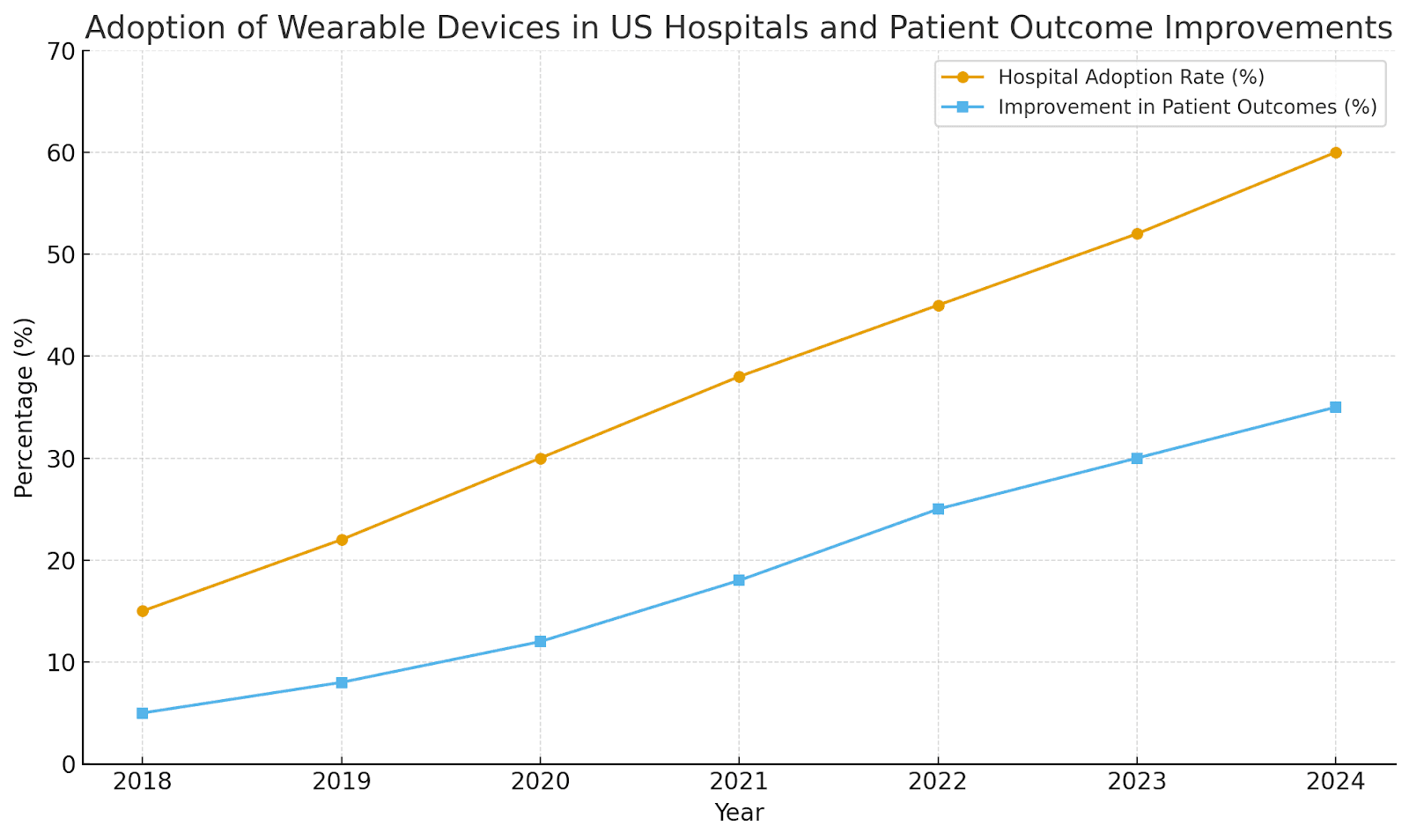
Adoption of wearable devices in US hospitals and improvements in patient monitoring and adherence from 2018–2024.
Fitness and Wellness Tracking
Many wearables track daily activity, sleep patterns, and caloric expenditure, helping patients stay healthy. This data also supports preventive care, giving providers insight into patient behavior and health trends they can use to guide wellness programs and lifestyle interventions.
Integration with Telemedicine
Wearable data can feed into telehealth platforms, improving remote consultations and building on the same must-have telemedicine software features that make virtual care effective. That means accurate, data-driven decisions without frequent in-person visits — more convenient for patients, more efficient for providers.
Together, these applications let wearable technology improve healthcare delivery — enabling proactive care, better patient engagement, and improved clinical outcomes.
2. Benefits of Wearable Devices for Patients and Providers
Wearable technology offers real benefits for patient outcomes, provider efficiency, and overall healthcare quality. Both patients and care teams gain from continuous monitoring, data insights, and better communication.
Enhanced Patient Engagement
Wearables help patients actively participate in their own care, much like the benefits of mobile health apps that encourage healthier behavior and better adherence. Real-time feedback on vitals, activity, or medication adherence encourages healthier habits. Studies show patients using wearable devices are more likely to follow treatment plans and stick with lifestyle changes, improving long-term health outcomes.
Improved Clinical Decision-Making
Continuous health data from wearables gives clinicians objective, real-time insight, supporting early diagnosis, personalized treatment plans, and timely intervention. AI-enabled wearables, for example, can detect irregular heart rhythms and alert providers before complications become serious. According to Builtin, hospitals using wearables report up to 30% faster response times to critical patient conditions.
Reduced Hospital Readmissions
Wearables enable remote monitoring, so providers can step in early when conditions worsen and avoid unnecessary hospital visits. That lowers healthcare costs and improves patient quality of life.
Through continuous monitoring, actionable insights, and better communication, wearable technology improves both patient engagement and provider efficiency — driving better clinical outcomes across healthcare settings.
3. Challenges and Considerations
Wearable technology offers real benefits, but rolling it out in healthcare brings challenges that need to be addressed for it to work reliably.
Data Privacy and Security
Wearables collect sensitive health data — heart rate, activity, glucose levels. Protecting it is critical for complying with HIPAA and other privacy regulations. Hospitals need encryption, secure transmission, and access controls to prevent data breaches.
Device Accuracy and Reliability
Not all wearable devices are equally accurate. Sensor quality varies, and that can lead to incorrect readings that affect clinical decisions. Hospitals should choose devices that meet medical-grade standards and calibrate sensors regularly for consistent performance.
Integration with Existing Systems
Wearable data has to integrate with electronic health records (EHRs) and clinical workflows, which raises real considerations around EHR implementation costs for hospitals planning long-term adoption. If devices and hospital systems aren’t compatible, that limits how the data can be used and undercuts the benefits of real-time monitoring — often requiring custom APIs or middleware.
Patient Adoption and Compliance
Patients may struggle to use wearable devices consistently. Training and education help ensure proper use and adherence, so the data collected has real clinical value.
Addressing these challenges — secure systems, accurate devices, seamless integration, patient education — lets healthcare organizations get the full value of wearable technology for patient care and operational efficiency.
4. Future Trends in Wearable Healthcare Technology
The future of wearable technology in healthcare points toward more advanced monitoring, predictive analytics, and personalized care — changing how patients and providers interact with health data.
AI and Predictive Analytics
AI will make wearables smarter by analyzing continuous patient data to predict health risks and suggest interventions. Predictive algorithms can spot early signs of conditions like arrhythmias or diabetes complications, letting providers act proactively and prevent hospitalizations.
Smart Clothing and Implantable Devices
Emerging wearable technologies include smart textiles and implantable devices that can monitor multiple vital signs at once, enabling continuous, non-intrusive monitoring for chronic disease management and post-operative care.
Integration with Telehealth
Wearables will increasingly integrate with telehealth platforms, feeding real-time patient data directly into virtual consultations — letting providers make informed decisions remotely and making care more convenient for patients.
Personalized Patient Insights
Future wearables will provide customized health insights, tailoring recommendations to a patient’s history, genetics, and lifestyle. Personalized feedback will improve treatment adherence and support preventive care — echoing why human factors in healthcare software design matter for usability and patient engagement.
Embracing these trends lets healthcare organizations use wearable technology to improve patient outcomes, boost operational efficiency, and deliver more proactive, personalized care.
Conclusion & Key Takeaways
Wearable technology is redefining modern healthcare — continuous monitoring, real-time data, and actionable insight for patients and providers alike. From better patient engagement and adherence to stronger clinical decisions and fewer hospital readmissions, wearables deliver measurable benefits across healthcare systems.
Key Takeaways
Hospitals and clinics can use wearable devices to increase operational efficiency, improve patient safety, and deliver personalized care. Integration with EHRs and telehealth platforms makes sure wearable data is actionable and informs better treatment plans.
Moving Forward
Organizations considering wearable technology should carefully evaluate device accuracy, data security, patient usability, and integration with existing systems — much like developing a healthcare app takes careful planning for compliance and scalability. Partnering with experienced healthcare technology providers ensures smooth adoption and gets the most clinical and operational value from wearables. At Latent, our medical device software development services help organizations build compliant, connected wearable solutions from architecture through deployment.
Embracing wearable healthcare technology strategically lets providers improve patient outcomes, optimize resources, and stay ahead in a fast-changing healthcare landscape.