
Compliance & Security

January 9, 2026

Chinmay Chandgude

Chinmay Chandgude

What is Software as a Medical Device (SaMD) : Definition, Classification, and Regulatory Pathways

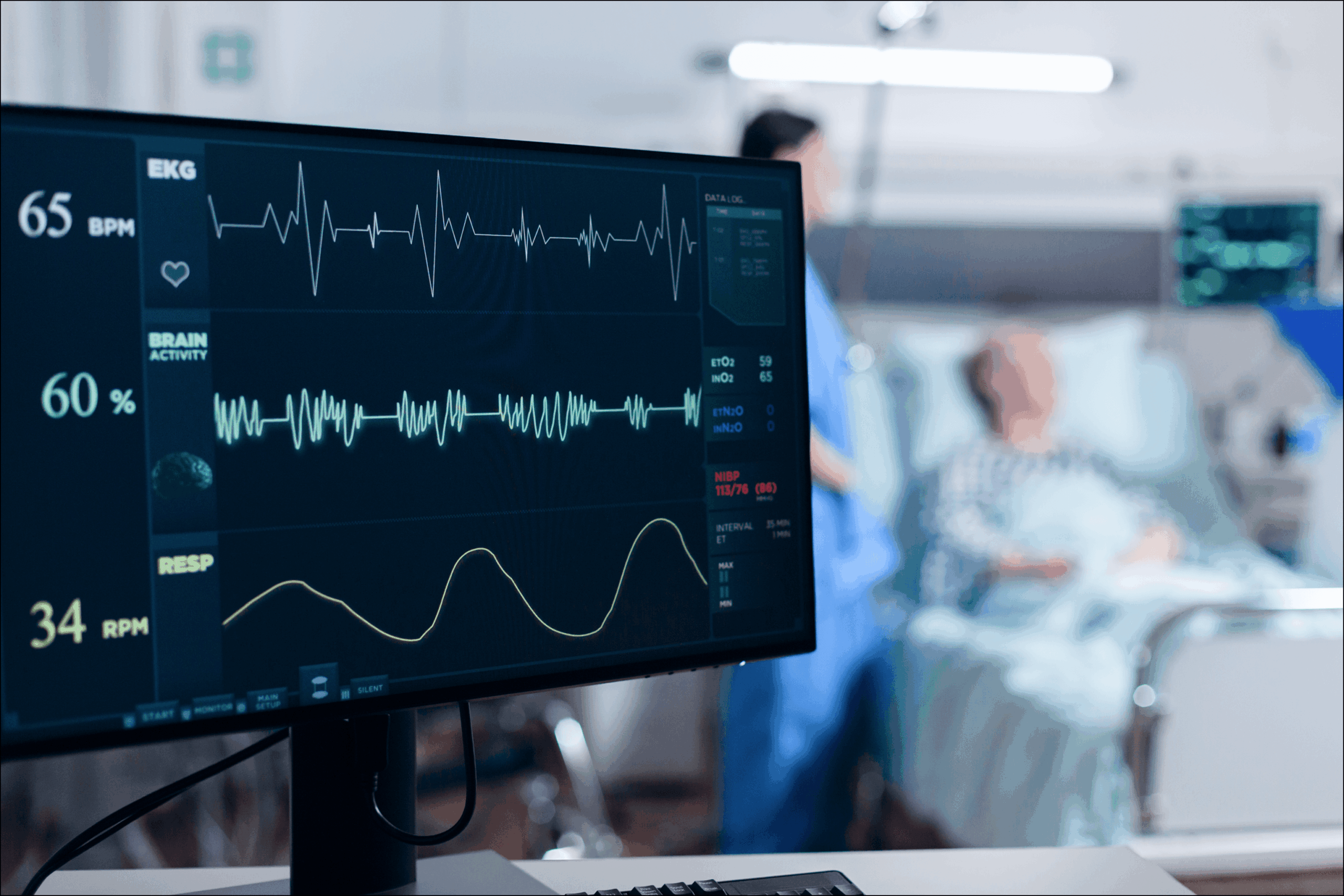
Medical monitor displaying real-time EKG and vital signs in a hospital setting, illustrating software as a medical device used for clinical monitoring and regulated healthcare workflows.

Healthcare in the U.S. is shifting toward software‑driven care, where clinical decisions, monitoring, and diagnostics increasingly happen through digital tools rather than dedicated hardware. Many of these applications now fall under Software as a Medical Device (SaMD), meaning they deliver a regulated medical function entirely through software.

The demand for such tools is rising quickly. According to a report, the global medical devices market is projected to reach USD 886.68 billion by 2032, driven by hospitals and digital health companies adopting software that can support faster assessments, guide treatment decisions, and manage chronic conditions remotely.

SaMD makes this possible by bringing clinical‑grade functionality into everyday devices like phones and tablets. This guide breaks down what SaMD is, how it is classified, how the FDA regulates it, and the key considerations on how to develop software as a medical device for clinical use.


What Is Software as a Medical Device (SaMD)?

Software as a Medical Device (SaMD) is any software that performs a medical function on its own, without being part of a physical medical device. It can monitor, diagnose, or help make treatment decisions using data from phones, sensors, or cloud systems.

The International Medical Device Regulators Forum (IMDRF) describes SaMD as a software intended for one or more medical purposes that operates independently of hardware. 

The U.S. FDA uses a similar definition, calling SaMD software that meets the medical device criteria under the FD&C Act but is “not part of a hardware medical device.”


Types of Software as a Medical Device

SaMD can be grouped based on what the software actually does in a clinical context. Broadly, it falls into four functional types:


  1. Diagnostic SaMD

Diagnostic SaMD reviews medical data such as images, symptoms, or test results to identify a possible condition or risk. It supports early detection by giving clinicians structured insights before they confirm a diagnosis.


  1. Monitoring SaMD

Monitoring SaMD is built to continuously track health information from sensors, wearable technology, or patient inputs. It alerts clinicians when readings move outside safe limits, helping them respond quickly to changes in a patient’s condition.


  1. SaMD for Treatment Support

SaMD for treatment support helps clinicians decide how to adjust therapy, dosage, or care plans. It uses patient data and clinical rules to recommend next steps, ensuring treatment stays aligned with the patient’s current health status.


  1. AI‑enabled SaMD

AI‑enabled SaMD leverages machine learning to interpret medical images, signals, or patterns. It identifies trends that may be difficult to detect manually and provides doctors with data‑driven insights to support clinical decisions.


Software as a Medical Device Examples

Type of SaMD

SaMD Example

What SaMD Is Not

Diagnostic SaMD

Software that reviews symptoms and lab values to flag possible thyroid issues.

Not a wellness app that tracks lifestyle habits.

Monitoring SaMD

A platform that tracks heart rhythm from a wearable and alerts clinicians for irregular patterns.

Not a fitness tracker that logs steps or workouts.

Treatment‑Support SaMD

Software that suggests inhaler dosage adjustments based on symptom trends.

Not a software (SiMD) that controls a physical inhaler or pump.

AI‑enabled SaMD

An AI tool that reviews chest X‑rays and highlights areas of concern.

Not an image viewer that only displays scans.


Classification of Software as a Medical Device (IMDRF Framework)

IMDRF is a global coalition of major regulators (like the FDA, EU, Canada, Japan, Australia) that created the SaMD framework, defining SaMD, its risk‑based classification, and lifecycle guidance used worldwide.

Without this framework, SaMD development would be inconsistent, unsafe, and impossible to regulate across countries.


  1. Severity of patient condition

IMDRF classifies SaMD based on the severity of the health condition it addresses.

  • Critical: The patient could face life‑threatening or permanent harm if the software gives the wrong output.

  • Serious: The patient may experience significant but reversible harm if the software is wrong.

  • Non‑serious: Incorrect output would have little or no clinical impact.


  1. Role of Software

The second factor is the role the software plays in patient care.

  • Treat/Diagnose: Software that directly provides diagnostic conclusions or treatment recommendations.

  • Drive Clinical Management: Software that guides ongoing care decisions, such as adjusting monitoring frequency or follow‑up steps.

  • Inform Clinical Management: Software that provides supportive information without directly influencing treatment choices.


III. IMDRF Categories I–IV

Combining condition severity and software role results, SaMD is classified into four risk categories:

SaMD Category

Risk level

Condition severity

Software role

Example

Category I

Low

Non‑serious

Informs care only; no diagnosis or treatment decisions

An app that tracks exercise or basic heart‑rate trends

Category II

Medium

Non‑serious to serious

Helps guide care decisions; limited treatment support

Software that suggests insulin dosage ranges for diabetic patients

Category III

High

Serious

Drives treatment decisions or provides diagnostic insights

Software that estimates cancer risk using patient data

Category IV

Very High

Critical, life‑threatening

Directly diagnoses or treats a condition

An AI tool that identifies malignant tumors from medical images

Now that the SaMD categories and risk levels are clear, the next step is understanding how SaMD is actually developed. Classification helps define the product’s usage, but the development process itself is crucial as it follows a structured lifecycle with defined design controls, documentation, testing, and clinical validation.


How to Develop Software as a Medical Device


  1. Determine risk classification

Classify the SaMD using the IMDRF framework to understand its intended use, clinical context, and overall risk level.


  1. Define software requirements and architecture

Create clear, testable software requirements and a structured architecture. This includes functional needs, safety requirements, data flows, and how different components interact.


  1. Follow IEC 62304‑aligned SDLC

SaMD must be developed using IEC 62304, which outlines the core phase of medical device software development, including planning, requirements, design, implementation, integration, verification, and maintenance. It helps manage risks, control changes, and document decisions, even when using Agile methodology.


  1. Verification 

Verification ensures every requirement is correctly implemented through tests, reviews, and inspections. Validation confirms the final software performs safely and effectively in conditions that reflect real use. Higher‑impact SaMD typically requires more extensive V&V evidence.


  1. Clinical evaluation 

Clinical evaluation demonstrates that the software is clinically meaningful and reliable. It includes:

  • Clinical association: showing the output is scientifically linked to the condition.

  • Analytical validation: proving the software processes inputs accurately.

  • Clinical validation: confirming it performs well in the intended population and setting.


  1. Prepare regulatory submission

Compile all technical, clinical, and quality evidence into the required regulatory format (e.g., 510(k), De Novo, PMA, CE files). Include design documents, test reports, risk analysis, cybersecurity, and usability data.


  1. Post‑market monitoring and updates

After launch, manufacturers must monitor real‑world performance, safety issues, complaints, and clinical outcomes. SaMD often behaves differently in diverse real‑world settings, so continuous monitoring, updates, and regulatory reporting are essential.


How the FDA Regulates SaMD

The FDA regulates Software as a Medical Device (SaMD) the same way it regulates physical medical devices: through a risk‑based system. Every SaMD is placed into Class I, II, or III depending on how much impact it has on diagnosis, treatment, or patient safety. 

Most software as medical devices fall in the Class II category, which means moderate risk.

Because SaMD can influence clinical decisions, it fits naturally into the FDA’s framework. The more the software affects patient care, the more evidence the FDA expects. To support review, developers must provide clear documentation, including software requirements, architecture, risk analysis, validation testing, usability findings, etc.


FDA Clearance and Approval Pathways for SaMD

The FDA uses different regulatory pathways depending on the product’s risk and whether similar devices already exist:


510(k) Pathway (Most Common)

  • Used for low‑to‑moderate‑risk SaMD.

  • Requires proving your software is similar to an existing FDA‑cleared device (predicate).

  • Fastest and most common route.


De Novo Pathway

  • Used when no predicate device exists.

  • Applies to first‑of‑its‑kind, low‑to‑moderate‑risk SaMD.

  • Creates a new device classification for future 510(k)s.


PMA (Premarket Approval)

  • Required for high‑risk SaMD that directly diagnoses or treats serious conditions.

  • Involves the most rigorous review, including strong clinical evidence and detailed technical documentation.


Disclaimer: This overview is for general understanding only and should not be treated as legal, regulatory, or compliance advice. Always consult official FDA guidance or regulatory experts when preparing an actual SaMD submission.


Key Regulatory Considerations for SaMD

SaMD must meet regulatory expectations that ensure it is safe, secure, clinically reliable, and maintainable throughout its lifecycle.


  1. Safety and reliability challenges

SaMD must consistently perform as intended under all expected conditions. Regulators expect strong risk management, robust testing, clear requirements, and evidence that the software remains reliable, accurate, and safe throughout its use.


  1. Cybersecurity and data protection

Cybersecurity is a major part of FDA review. The agency expects secure design practices, threat modelling, and a Software Bill of Materials (SBOM) so regulators know exactly which third‑party components are used in the product.


  1. Interoperability

SaMD often interacts with EHRs, medical device software, or cloud systems. Provide proof that integrations are safe, stable, and do not introduce new risks. Clear interface specifications and compatibility testing are essential.


  1. AI‑specific regulatory requirements

AI‑based SaMD must demonstrate data quality, model transparency, and clinical performance. Developers must address bias, ensure the model is reproducible, and provide evidence that it performs safely and consistently across different patient populations and real‑world conditions.


Conclusion

Bringing SaMD to market in the U.S. requires more than technical excellence. It demands clarity, discipline, and an understanding of how software behaves in real clinical environments. 

The regulatory landscape can feel complex, but it ultimately reflects the same priorities most health‑tech businesses share, that is, building custom healthcare software solutions that are reliable, secure, and genuinely useful to clinicians and patients. 

Ready to build an FDA‑compliant, low‑risk SaMD? Latent’s health‑tech experts can support you. From shaping regulatory strategy to designing SaMD architecture and preparing for U.S. market entry. Get in touch to begin.


FAQs 


  1. How can I tell if my software qualifies as SaMD?

Your software is considered SaMD if it performs a medical function like diagnosing, monitoring, or supporting treatment decisions without needing a physical medical device. The deciding factor is whether its intended use fits the FDA’s definition of a medical device.


  1. What is the difference between SaMD and SiMD?

SaMD is a software that delivers a medical function on its own. SiMD is a software that operates inside or alongside a physical medical device. The distinction comes down to whether the software depends on hardware to perform its medical role.


  1. What are the main challenges in developing SaMD?

Common challenges in building software as a medical device include meeting regulatory expectations, ensuring safety and reliability, managing cybersecurity risks, validating performance, and maintaining complete documentation throughout development and updates.


  1. Does every SaMD require FDA clearance?

No. Only software that performs a regulated medical function, such as diagnosing, treating, or influencing clinical decisions, needs FDA clearance or approval before it can be marketed in the U.S.


  1. How long does it take to get SaMD approved?

Approval timelines depend on the pathway. A 510(k) review typically takes a few months, De Novo reviews take longer, and PMA submissions require the most time because they involve extensive testing and clinical evidence.

Healthcare in the U.S. is shifting toward software‑driven care, where clinical decisions, monitoring, and diagnostics increasingly happen through digital tools rather than dedicated hardware. Many of these applications now fall under Software as a Medical Device (SaMD), meaning they deliver a regulated medical function entirely through software.

The demand for such tools is rising quickly. According to a report, the global medical devices market is projected to reach USD 886.68 billion by 2032, driven by hospitals and digital health companies adopting software that can support faster assessments, guide treatment decisions, and manage chronic conditions remotely.

SaMD makes this possible by bringing clinical‑grade functionality into everyday devices like phones and tablets. This guide breaks down what SaMD is, how it is classified, how the FDA regulates it, and the key considerations on how to develop software as a medical device for clinical use.


What Is Software as a Medical Device (SaMD)?

Software as a Medical Device (SaMD) is any software that performs a medical function on its own, without being part of a physical medical device. It can monitor, diagnose, or help make treatment decisions using data from phones, sensors, or cloud systems.

The International Medical Device Regulators Forum (IMDRF) describes SaMD as a software intended for one or more medical purposes that operates independently of hardware. 

The U.S. FDA uses a similar definition, calling SaMD software that meets the medical device criteria under the FD&C Act but is “not part of a hardware medical device.”


Types of Software as a Medical Device

SaMD can be grouped based on what the software actually does in a clinical context. Broadly, it falls into four functional types:


  1. Diagnostic SaMD

Diagnostic SaMD reviews medical data such as images, symptoms, or test results to identify a possible condition or risk. It supports early detection by giving clinicians structured insights before they confirm a diagnosis.


  1. Monitoring SaMD

Monitoring SaMD is built to continuously track health information from sensors, wearable technology, or patient inputs. It alerts clinicians when readings move outside safe limits, helping them respond quickly to changes in a patient’s condition.


  1. SaMD for Treatment Support

SaMD for treatment support helps clinicians decide how to adjust therapy, dosage, or care plans. It uses patient data and clinical rules to recommend next steps, ensuring treatment stays aligned with the patient’s current health status.


  1. AI‑enabled SaMD

AI‑enabled SaMD leverages machine learning to interpret medical images, signals, or patterns. It identifies trends that may be difficult to detect manually and provides doctors with data‑driven insights to support clinical decisions.


Software as a Medical Device Examples

Type of SaMD

SaMD Example

What SaMD Is Not

Diagnostic SaMD

Software that reviews symptoms and lab values to flag possible thyroid issues.

Not a wellness app that tracks lifestyle habits.

Monitoring SaMD

A platform that tracks heart rhythm from a wearable and alerts clinicians for irregular patterns.

Not a fitness tracker that logs steps or workouts.

Treatment‑Support SaMD

Software that suggests inhaler dosage adjustments based on symptom trends.

Not a software (SiMD) that controls a physical inhaler or pump.

AI‑enabled SaMD

An AI tool that reviews chest X‑rays and highlights areas of concern.

Not an image viewer that only displays scans.


Classification of Software as a Medical Device (IMDRF Framework)

IMDRF is a global coalition of major regulators (like the FDA, EU, Canada, Japan, Australia) that created the SaMD framework, defining SaMD, its risk‑based classification, and lifecycle guidance used worldwide.

Without this framework, SaMD development would be inconsistent, unsafe, and impossible to regulate across countries.


  1. Severity of patient condition

IMDRF classifies SaMD based on the severity of the health condition it addresses.

  • Critical: The patient could face life‑threatening or permanent harm if the software gives the wrong output.

  • Serious: The patient may experience significant but reversible harm if the software is wrong.

  • Non‑serious: Incorrect output would have little or no clinical impact.


  1. Role of Software

The second factor is the role the software plays in patient care.

  • Treat/Diagnose: Software that directly provides diagnostic conclusions or treatment recommendations.

  • Drive Clinical Management: Software that guides ongoing care decisions, such as adjusting monitoring frequency or follow‑up steps.

  • Inform Clinical Management: Software that provides supportive information without directly influencing treatment choices.


III. IMDRF Categories I–IV

Combining condition severity and software role results, SaMD is classified into four risk categories:

SaMD Category

Risk level

Condition severity

Software role

Example

Category I

Low

Non‑serious

Informs care only; no diagnosis or treatment decisions

An app that tracks exercise or basic heart‑rate trends

Category II

Medium

Non‑serious to serious

Helps guide care decisions; limited treatment support

Software that suggests insulin dosage ranges for diabetic patients

Category III

High

Serious

Drives treatment decisions or provides diagnostic insights

Software that estimates cancer risk using patient data

Category IV

Very High

Critical, life‑threatening

Directly diagnoses or treats a condition

An AI tool that identifies malignant tumors from medical images

Now that the SaMD categories and risk levels are clear, the next step is understanding how SaMD is actually developed. Classification helps define the product’s usage, but the development process itself is crucial as it follows a structured lifecycle with defined design controls, documentation, testing, and clinical validation.


How to Develop Software as a Medical Device


  1. Determine risk classification

Classify the SaMD using the IMDRF framework to understand its intended use, clinical context, and overall risk level.


  1. Define software requirements and architecture

Create clear, testable software requirements and a structured architecture. This includes functional needs, safety requirements, data flows, and how different components interact.


  1. Follow IEC 62304‑aligned SDLC

SaMD must be developed using IEC 62304, which outlines the core phase of medical device software development, including planning, requirements, design, implementation, integration, verification, and maintenance. It helps manage risks, control changes, and document decisions, even when using Agile methodology.


  1. Verification 

Verification ensures every requirement is correctly implemented through tests, reviews, and inspections. Validation confirms the final software performs safely and effectively in conditions that reflect real use. Higher‑impact SaMD typically requires more extensive V&V evidence.


  1. Clinical evaluation 

Clinical evaluation demonstrates that the software is clinically meaningful and reliable. It includes:

  • Clinical association: showing the output is scientifically linked to the condition.

  • Analytical validation: proving the software processes inputs accurately.

  • Clinical validation: confirming it performs well in the intended population and setting.


  1. Prepare regulatory submission

Compile all technical, clinical, and quality evidence into the required regulatory format (e.g., 510(k), De Novo, PMA, CE files). Include design documents, test reports, risk analysis, cybersecurity, and usability data.


  1. Post‑market monitoring and updates

After launch, manufacturers must monitor real‑world performance, safety issues, complaints, and clinical outcomes. SaMD often behaves differently in diverse real‑world settings, so continuous monitoring, updates, and regulatory reporting are essential.


How the FDA Regulates SaMD

The FDA regulates Software as a Medical Device (SaMD) the same way it regulates physical medical devices: through a risk‑based system. Every SaMD is placed into Class I, II, or III depending on how much impact it has on diagnosis, treatment, or patient safety. 

Most software as medical devices fall in the Class II category, which means moderate risk.

Because SaMD can influence clinical decisions, it fits naturally into the FDA’s framework. The more the software affects patient care, the more evidence the FDA expects. To support review, developers must provide clear documentation, including software requirements, architecture, risk analysis, validation testing, usability findings, etc.


FDA Clearance and Approval Pathways for SaMD

The FDA uses different regulatory pathways depending on the product’s risk and whether similar devices already exist:


510(k) Pathway (Most Common)

  • Used for low‑to‑moderate‑risk SaMD.

  • Requires proving your software is similar to an existing FDA‑cleared device (predicate).

  • Fastest and most common route.


De Novo Pathway

  • Used when no predicate device exists.

  • Applies to first‑of‑its‑kind, low‑to‑moderate‑risk SaMD.

  • Creates a new device classification for future 510(k)s.


PMA (Premarket Approval)

  • Required for high‑risk SaMD that directly diagnoses or treats serious conditions.

  • Involves the most rigorous review, including strong clinical evidence and detailed technical documentation.


Disclaimer: This overview is for general understanding only and should not be treated as legal, regulatory, or compliance advice. Always consult official FDA guidance or regulatory experts when preparing an actual SaMD submission.


Key Regulatory Considerations for SaMD

SaMD must meet regulatory expectations that ensure it is safe, secure, clinically reliable, and maintainable throughout its lifecycle.


  1. Safety and reliability challenges

SaMD must consistently perform as intended under all expected conditions. Regulators expect strong risk management, robust testing, clear requirements, and evidence that the software remains reliable, accurate, and safe throughout its use.


  1. Cybersecurity and data protection

Cybersecurity is a major part of FDA review. The agency expects secure design practices, threat modelling, and a Software Bill of Materials (SBOM) so regulators know exactly which third‑party components are used in the product.


  1. Interoperability

SaMD often interacts with EHRs, medical device software, or cloud systems. Provide proof that integrations are safe, stable, and do not introduce new risks. Clear interface specifications and compatibility testing are essential.


  1. AI‑specific regulatory requirements

AI‑based SaMD must demonstrate data quality, model transparency, and clinical performance. Developers must address bias, ensure the model is reproducible, and provide evidence that it performs safely and consistently across different patient populations and real‑world conditions.


Conclusion

Bringing SaMD to market in the U.S. requires more than technical excellence. It demands clarity, discipline, and an understanding of how software behaves in real clinical environments. 

The regulatory landscape can feel complex, but it ultimately reflects the same priorities most health‑tech businesses share, that is, building custom healthcare software solutions that are reliable, secure, and genuinely useful to clinicians and patients. 

Ready to build an FDA‑compliant, low‑risk SaMD? Latent’s health‑tech experts can support you. From shaping regulatory strategy to designing SaMD architecture and preparing for U.S. market entry. Get in touch to begin.


FAQs 


  1. How can I tell if my software qualifies as SaMD?

Your software is considered SaMD if it performs a medical function like diagnosing, monitoring, or supporting treatment decisions without needing a physical medical device. The deciding factor is whether its intended use fits the FDA’s definition of a medical device.


  1. What is the difference between SaMD and SiMD?

SaMD is a software that delivers a medical function on its own. SiMD is a software that operates inside or alongside a physical medical device. The distinction comes down to whether the software depends on hardware to perform its medical role.


  1. What are the main challenges in developing SaMD?

Common challenges in building software as a medical device include meeting regulatory expectations, ensuring safety and reliability, managing cybersecurity risks, validating performance, and maintaining complete documentation throughout development and updates.


  1. Does every SaMD require FDA clearance?

No. Only software that performs a regulated medical function, such as diagnosing, treating, or influencing clinical decisions, needs FDA clearance or approval before it can be marketed in the U.S.


  1. How long does it take to get SaMD approved?

Approval timelines depend on the pathway. A 510(k) review typically takes a few months, De Novo reviews take longer, and PMA submissions require the most time because they involve extensive testing and clinical evidence.

Chinmay Chandgude

Chinmay Chandgude

Linkedin Logo

Chinmay Chandgude is a partner at Latent with over 9 years of experience in building custom digital platforms for healthcare and finance sectors. He focuses on creating scalable and secure web and mobile applications to drive technological transformation. Based in Pune, India, Chinmay is passionate about delivering user-centric solutions that improve efficiency and reduce costs.